Accelerating solutions that protect both planet and industry
The technologies to decarbonize industry already exist. The problem is they never reach production: they remain trapped between lab and factory, in a deadlock that keeps industrial emissions rising—the sector responsible for 45% of global greenhouse gas growth since 2000.¹
Since 2020, Forest Valley Institute Social Enterprise has worked to unlock this stalemate: we connect innovators with industry, make technologies adoptable, and guide the transition all the way to the factory floor.
Why your donation is an investment in the future of the system
Two distinct activities, one goal: climate transition
Forest Valley Institute operates on two complementary levels:
For Companies
We help businesses integrate sustainability into their operational decisions, designing tailored scouting of climate tech solutions, innovation programs, and support for industrial technology adoption.
For the Ecosystem
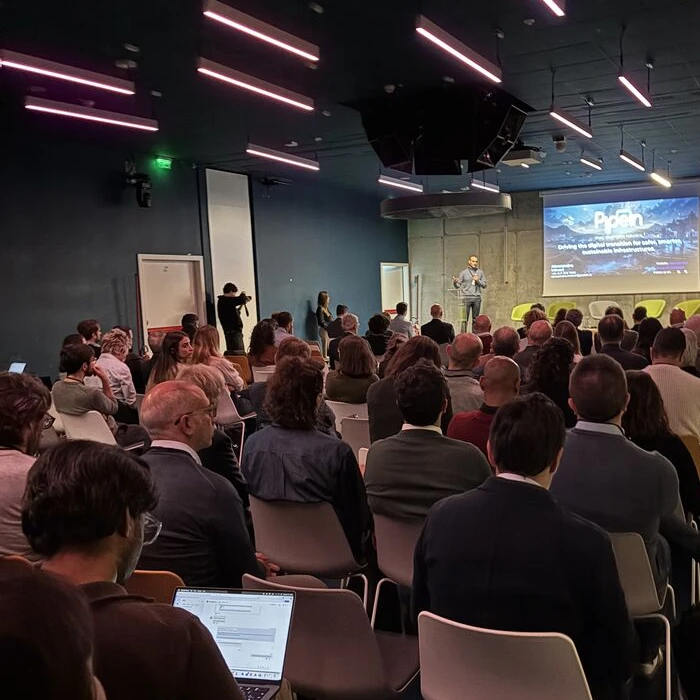
We work with sector leaders to develop: support and acceleration programs for early-stage startups, events for dialogue and best practice sharing among decision-makers, infrastructure projects such as mentor networks and structured matching between industrial needs and emerging solutions.
These two dimensions reinforce each other. Without a solid ecosystem, the transition stalls: corporate decision-makers operate in a context that measures short-term performance but demands long-term sustainability results.³⁴ In this structural tension, being first to innovate becomes a risk difficult to justify—and this is exactly where Forest Valley intervenes.
Enabling innovation where the market stops
There are activities critical for the transition that do not follow immediate profit logic: they are not yet commercial products, but they are the necessary steps to make technologies safe, adoptable, and accessible to all.
Yet they are essential to:
- surface industrial challenges in competitiveness and sustainability
- build culture and improve the quality of ESG decisions
- reduce risk in technology adoption
Forest Valley's ecosystem activities exist to strengthen exactly this shared space, where innovation becomes more readable, comparable, and actionable for companies of any size and sector.
One data point confirms this: only 4% of global climate finance covers technology adoption risks.²

Join the ecosystem and support industrial transition
Supporting Forest Valley Institute funds activities that strengthen the European business ecosystem underlying sustainable industrial innovation.
Startup Programs
Support and acceleration of highly selected pre-seed and seed startups in collaboration with the community, with demonstrated positive impact in the most urgent areas for industry (energy, storage, green chemistry, supply chain tracking, AI solutions, scope 3...).
Community Education
Open training events for international audiences, materials usable by corporate teams (sharing emerging trends, best practices, concrete industrial adoption cases), curated cross-industry connection opportunities for innovation, CSR, venture capital, and operations leaders.
Infrastructure Projects
Strengthening ecosystem support projects: qualified senior mentor networks, structured activities for collecting and disseminating innovation needs and insights.
We have accelerated solutions for: producing low-cost green hydrogen (Antares Electrolysis), permanently storing CO² in seawater (Limenet), recycling lithium batteries using agricultural waste (AraBat), optimizing industrial machinery with predictive AI (Neuron SW), producing wind turbine blades from laminated wood (Voodin Blades), developing compostable biomaterials from agricultural waste (Biophilica), reducing energy consumption in industrial drying by over 70% (BBWK)—and many others.
Our Ecosystem
Who we build the transition with
Our operational network: companies, funds, accelerators, and institutions we work with daily to gather market needs, identify solutions, and bring them into production. We organize dissemination events and actively contribute to the debate on industrial transition policies.
Gruppo CAP, Edison SPA, Aquanexa, Terna, Alia SPA, Marazzato, New Energy Nexus, Magaldi, Breakthrough Energy, gNous, Gruppo Maire, A2A, Generali, SellaLab, Temera, Primo Climate Fund, Tech Energy Ventures, Radical HR, Green Talents, .feel, Confindustria Moda, Fondazione Pistoletto, Lenzig Group, Bocconi for Innovation, Cariplo Factory.
Join the ecosystem and help accelerate industrial transition.
Support Industrial Transition
Forest Valley Institute is a Social Enterprise registered in the Third Sector Registry—a non-profit entity. We do not distribute profits: every euro donated is reinvested in scouting, acceleration, and education.
Tax note: Donations may qualify for tax benefits under current legislation for Third Sector/Social Enterprises, within legal limits and requirements.

The impact of your donation
Supporting Forest Valley means generating benefits that ripple through the entire value chain: more informed decisions, stronger startups, and reduced risk for those leading change within companies.
All ecosystem partners are the first to know about our activities, trends, and opportunities through our bimonthly newsletter, and can share organizational challenges or sustainability hurdles, as well as showcase their success stories and exchange value with other members.
Impact is not a single project, but the quality of decisions the system is able to make over time. The sooner a working solution reaches production, the more companies adopt it, the more impact multiplies. According to the World Economic Forum, collaborative industrial clusters can reduce emissions by 877 MtCO²e, protecting $508 billion in GDP and 4.6 million jobs.⁵
The best thing is seeing the impact that innovation brings to climate change and the selection of startups at the Demo Day was very valuable.
Forest Valley team's empathy and understanding make them truly unique. They know what startups need to succeed, and they have the expertise and experience to help them. They understand the challenges they face, and they're always there to lend a helping hand.
FAQ
Why aren't these activities paid for directly by companies?
Because they are a "common good." A company pays for an exclusive service; our ecosystem activities prepare the ground for everyone, lowering barriers to sustainability entry. This is where strategic philanthropy and CSR come in.
Why should I use CSR budget rather than referring to Innovation?
Because innovation budgets are often insufficient or locked by short-term targets. Strategic CSR allows you to act outside the box, funding that preparatory work which internal departments lack resources to do.
What is the difference between you and a traditional accelerator?
An accelerator aims for "exit" (selling the startup). We aim for industrial impact. Our success is not just getting technology to factory, but seeing it scale: when a solution moves from one pilot plant to 100 facilities, environmental impact multiplies.
How do you guarantee impact?
We select only technologies with measurable emission reduction potential and work exclusively to bring them into production. Less slogans, more ground work.
How do you select technologies?
Solutions in our portfolio are validated by a Technical Board composed of Innovation and R&D leaders from major industrial companies. Every quarter the Board evaluates technical robustness, market interest, and real adoption potential—to ensure resources go to solutions with the highest impact potential.
What is the difference between you and an observatory?
An observatory describes change. We enable it. Our output is not a PDF report, but an operational portfolio: ready solutions that companies can activate immediately.
Why don't you do carbon offsetting or tree planting?
Because offsetting compensates for damage; we work to eliminate it at the source. The technologies we bring to factory today will have maximum impact when scaled. It is work that takes time, but the impact multiplier is infinitely higher than any offset.
Transparency: who oversees your work?
We are a Social Enterprise. Activities and reporting are subject to governance and controls, including review by a Sole Auditor. Activities are reported annually in our public Social Report.
Are there tax benefits for donors?
Yes. Forest Valley is a Third Sector entity. Donations are deductible from business income (for companies) and eligible for tax deductions for individuals, under art. 83 D.Lgs 117/2017.
Sources
¹ IPCC AR6 WG3, Ch. 11 — Industrial emissions contributed to 45% of global greenhouse gas growth since 2000.
² World Bank / CPI — Only 4% of climate finance is allocated to technology adoption risk mitigation.
³ AFGR — Sustainability targets in incentive plans are often less challenging and less influential than financial targets.
⁴ OECD / Copenhagen Economics — Pressure for quarterly results limits long-term investments in green innovation.
⁵ World Economic Forum — Collaborative industrial clusters can reduce 877 MtCO²e, protecting $508 billion in GDP and 4.6 million jobs.
⁶ Yale Clean Energy Forum — The "Valley of Death" blocks capital-intensive climate-tech startups between prototype and commercialization.